
BECOME A YOGA THERAPIST. EARN YOUR C-IAYT.
We believe the future of healthcare is not only found in treating disease, but in equipping people with the knowledge, skills, and practices to actively participate in their own health while working alongside modern medicine to create healthier individuals, communities, and systems. As the demand for evidence-informed approaches to stress management, mindfulness, resilience, and mental well-being continues to grow, yoga therapists are helping shape the future of integrative medicine and organizational wellness. Join a profession that is pioneering person-centered, sustainable approaches to health and healing.
Integrative Yoga Therapy Studies provides IAYT-accredited professional yoga therapy education for yoga teachers preparing to bring person-centered, evidence-informed yoga therapy into private practice, healthcare, community and organizational settings. This program is for those who have already completed their 200 Hour Yoga Teacher Training Program. If you have not completed the pre-requisite of the 200 Hour and are interested in beginning your journey as a Yoga Teacher, in-studio or online. If you are an RYT 200 and ready to begin your 300 Hour, see in-studio or online.

“This book provides a detailed rationale for the use of yoga in military-related populations and includes practical strategies for successfully applying yoga to improve wellness and quality of life. Surveys have shown that chronic stress and its consequences are at epidemic proportions internationally. This is exacerbated in stressful occupations such as the military where chronic stress can lead to burnout and some of the occupational activities are prone to inducing psychological trauma. Research is demonstrating that yoga practices incorporating physical exercise, relaxation, breathwork and meditation are effective in managing stress, enhancing stress resilience and tolerance, and even in ameliorating symptoms of trauma.”
-Sat Bir Singh Khalsa, Ph.D.
“Melissa Aguirre has done something remarkably difficult and deeply needed: she has translated yoga, mindfulness, and nervous system regulation into language and practices that will resonate within military culture while preserving the depth and integrity of the work itself. This book is thoughtful, practical, and exceptionally well-informed, offering a rare combination of operational relevance, compassion, and real-world application. While many resources focus primarily on veterans, this work stands out for its grounding in the realities of active duty military life and the broader military community. It is an invaluable resource for those working in military human performance, readiness, and holistic health, as well as for yoga professionals seeking to better support service members, veterans, and military families.”
-Kelly Howard, COL, USAR, NBC-HWC, RYT-500
What is Yoga Therapy?
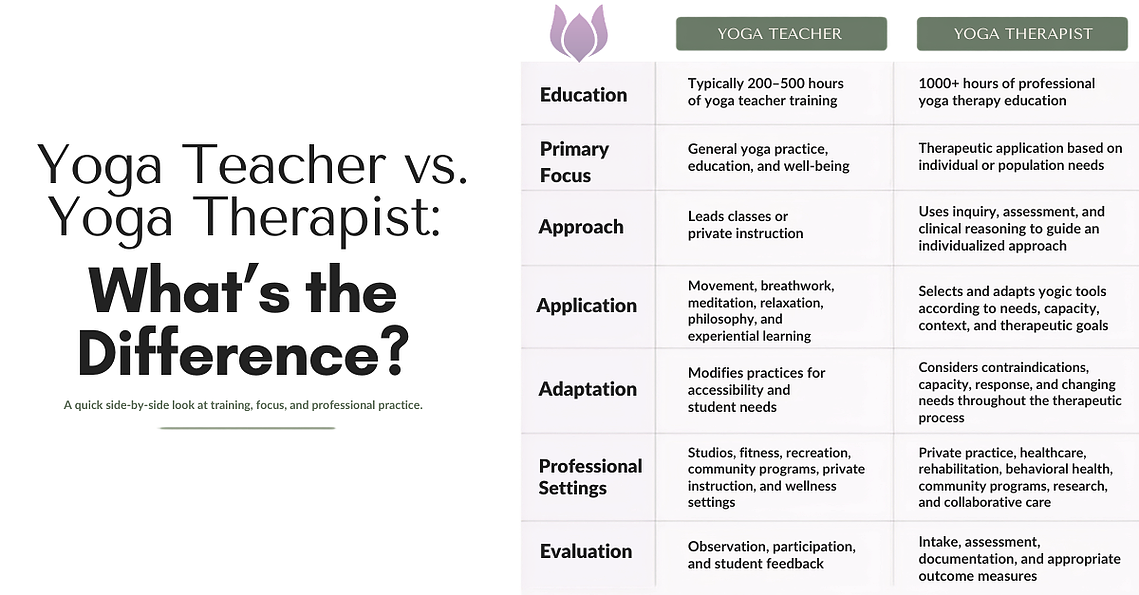
Yoga therapy is an emerging discipline within integrative medicine that applies the principles and practices of yoga to support health, well-being, and quality of life. Grounded in a whole-person model of care, it recognizes that physical, mental, emotional, social, and spiritual health are deeply interconnected. Rather than simply managing symptoms, yoga therapy helps people develop the awareness, skills, and behaviors that support resilience, self-regulation, and lifelong health. As healthcare continues to shift toward prevention, personalized care, and population health, yoga therapy stands at the frontier of a new vision of wellness. A vision that empowers individuals to actively participate in their own healing while working alongside conventional medicine and other healthcare disciplines.

BOOK YOUR CONSULTATION CALL TO BEGIN
Our Yoga Therapy Education is a modular format and offers a person-centered approach to learning while being cozied into community. To begin Yoga Therapy or if you are interested and want more information, please complete below and we will be in touch within 3-5 business days to schedule a consultation call directly with you.